Source FPV Racing Whoop Quadcopter for Inspection, Racing, and Surveillance
Explore 30 listings for the fpv racing whoop quadcopter designed for industrial inspection, competitive racing, and security surveillance. Buyers can compare specifications like flight time, payload capacity, and video resolution across verified suppliers offering remote control options; compare the available evidence and request quotations based on your requirements.
Key considerations
Products List




Comprehensive Sourcing Guide
FPV Racing Whoop Quadcopter Sourcing Guide
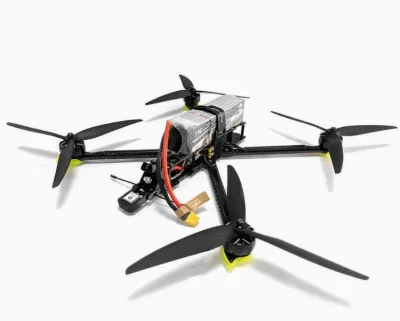
The FPV racing whoop quadcopter market presents a distinct category of compact, high-agility aircraft designed for indoor and tight-space racing scenarios. Based on observed listings, these units often feature flapping-wing structures or specialized FPV drone frames constructed from carbon fiber to ensure durability during high-impact maneuvers. Buyers must distinguish between general racing models and those explicitly engineered for payload delivery, as the structural integrity requirements differ significantly between pure speed applications and utility-focused variants.
Procurement decisions should prioritize the specific motor configuration and battery compatibility, as these elements directly dictate flight performance and operational range. The observed data indicates a prevalence of brushless motors paired with Molicel or Li-Po battery packs, which are critical for maintaining the high discharge rates required for rapid acceleration. Sourcing agents must verify that the selected model supports the intended control distance, as some listings suggest ranges between 30 meters and several kilometers, a variance that fundamentally alters the suitability of the drone for different racing environments.
Product Scope and Observed Listing Signals
Current market listings reveal a wide spectrum of product attributes, ranging from mini-size units with 1080p video capture to larger industrial-grade drones capable of carrying payloads up to 3.5 kilograms. While the core keyword focuses on racing whoops, the available inventory includes models labeled as "7 Inch Payload Drones" or "Fpv Racing Drone" variants with private mold capabilities. Buyers must carefully filter these listings to ensure the physical dimensions and frame structure align with the specific constraints of their racing track or operational venue.
The observed product names and specifications often contain mixed terminology, such as "Fpv Racking Drone" or "Radiomaster Tx12 Mkii Remote Control," which may indicate bundled accessories rather than the drone itself. It is essential to scrutinize the "Product Name" and "Function" fields to confirm whether the item is a standalone airframe or a complete kit including the radio controller and camera. Misinterpreting these signals can lead to procurement of incomplete systems that fail to meet the immediate operational needs of a racing team or industrial inspection unit.
Technical Specifications to Verify
Technical verification must begin with the image transmission frequency and video capture resolution, as these parameters define the clarity and latency of the first-person view experience. Listings frequently cite frequencies around 915MHz or 750MHz and resolutions ranging from 1080p to 4K UHD, yet the actual effective distance for stable transmission varies significantly between models. Buyers should demand specific test data regarding signal stability at maximum operating radii to ensure the drone remains controllable during high-speed maneuvers without video dropout.
The flight time and battery configuration are equally critical, with observed ranges typically spanning 25 to 30 minutes for specific high-altitude models. However, the battery type, whether 4S, 6S, or 8S lithium, directly impacts the thrust-to-weight ratio and the overall agility of the whoop quadcopter. Procurement teams must validate that the battery capacity matches the motor's power draw to prevent premature power loss, ensuring the drone can complete a full race lap or inspection cycle without interruption.
Compliance and Safety Documentation
Regulatory compliance is a non-negotiable aspect of sourcing, with observed certifications including FCC, CE, and CCC marks appearing across various product listings. These certifications indicate that the electronic components and radio transmission frequencies meet specific regional safety and interference standards, which is vital for legal operation in many jurisdictions. Buyers must request valid certification documents for each batch to ensure the equipment has not been modified in a way that voids its compliance status.
Safety documentation should also cover the structural integrity of the carbon fiber frame and the reliability of the gyroscopic stabilization systems. The observed "6 Gyro" specifications suggest advanced stabilization, but this must be cross-referenced with the "Operator Skill Level" requirement, which is often listed as "Expert." Procurement contracts should explicitly state that the supplier guarantees the drone meets the safety standards implied by these certifications, protecting the buyer from liability in the event of equipment failure.
Cost Drivers and Commercial Terms
The price range for these units is highly variable, spanning from approximately $19.80 to $13,000, driven primarily by the complexity of the frame, the quality of the camera sensor, and the inclusion of proprietary private molds. High-cost models often feature advanced payload capabilities or ultra-high-altitude performance, whereas lower-cost options may be basic racing frames with standard video transmission. Buyers must analyze the cost-per-unit against the specific performance metrics required, avoiding the trap of over-specifying for simple racing applications or under-specifying for industrial tasks.
Commercial terms such as Minimum Order Quantity (MOQ) and lead times are equally influential in the total cost of ownership, with observed MOQs ranging from 1 to 36 units. The availability of customization options, including private molding and specific battery configurations, can significantly impact the final price and production timeline. Procurement strategies should account for these variables by negotiating volume discounts early and clarifying whether the quoted price includes the necessary remote control and battery packs.
Supplier Qualification and Quality Control
Supplier qualification requires a rigorous assessment of their manufacturing capabilities, particularly regarding the production of carbon fiber frames and the integration of brushless motor systems. The observed "Place of Origin" includes locations like Sichuan and Wuhan, China, which are known hubs for drone manufacturing, but buyers must verify the specific factory's quality control processes. Requesting samples for stress testing is essential to confirm that the "Private Mold" claims translate into durable, high-performance airframes that can withstand the rigors of competitive racing.
Quality control protocols must extend to the electronic components, ensuring that the 1/4 inch sensor size and video capture resolution meet the advertised specifications. Buyers should implement a pre-shipment inspection plan that verifies the "Effective Distance" and "Control Distance" claims through independent testing. This step is crucial to prevent the receipt of units that appear compliant on paper but fail to deliver the necessary performance in real-world operating conditions.
Long-Term Procurement Checks
Long-term procurement success depends on establishing a reliable supply chain for spare parts, particularly batteries and motors, which are subject to wear and tear during frequent racing sessions. The observed variety of battery types, from 3300mAh to 6000mAh Li-Po packs, necessitates a clear agreement with the supplier regarding the availability of compatible replacements. Without a guaranteed supply of consumables, the operational downtime of a racing team or inspection fleet can become unmanageable.
Buyers must also monitor the evolution of the product line to ensure that the "Model" numbers and specifications remain consistent over time. The presence of multiple model identifiers, such as "DV10PRO" and "F121," suggests a dynamic product portfolio that may change rapidly. Establishing a long-term partnership with a supplier who provides consistent technical support and updates on firmware or hardware improvements is essential for maintaining a competitive edge in the FPV racing market.
FAQs
What is the maximum flight time for this FPV drone?
The maximum flight time ranges from 25 to 30 minutes per charge. This duration depends on the specific battery configuration used, such as 4s, 6s, or 8s lithium packs, and the payload weight carried during the industrial or racing operation.
Which certifications do these FPV racing drones hold?
These drones hold multiple certifications including ISO, FCC, CE, and CCC. These standards ensure compliance with international safety and electromagnetic regulations, making the products suitable for industrial usage and remote control operations in various global markets.
Can I customize the structure of this FPV drone?
Yes, customization is available for the flapping-wing UAV structure and frame. Buyers can request private molds and specific modifications to the carbon fiber frame to meet unique industrial requirements or specific racing performance needs for the remote control system.
What is the effective control distance for this drone?
The effective control distance is at least 30 meters, with some models supporting up to 80 to 100 meters. Image transmission can reach distances of 7 kilometers depending on the frequency used, ensuring reliable remote operation for expert operators in high-altitude scenarios.
How much payload can this FPV drone carry?
The maximum payload capacity is 3.5 kilograms for standard models. Some specialized configurations may support higher weights, but the 3.5kg limit applies to the general industrial and racing drone types listed with brushless motors and carbon fiber frames.
What video resolution does the camera capture?
The camera captures video at 1080p full HD resolution, with some models supporting 4K UHD. The sensor size is typically 1/4 inch, providing clear image transmission for FPV racing and industrial inspection tasks over long distances.
Where are these FPV drones manufactured?
These drones are manufactured in China, specifically in Sichuan and Wuhan regions. The products originate from verified factories that produce flapping-wing UAVs and FPV racing drones with remote control capabilities and brushless motor technology for industrial applications.